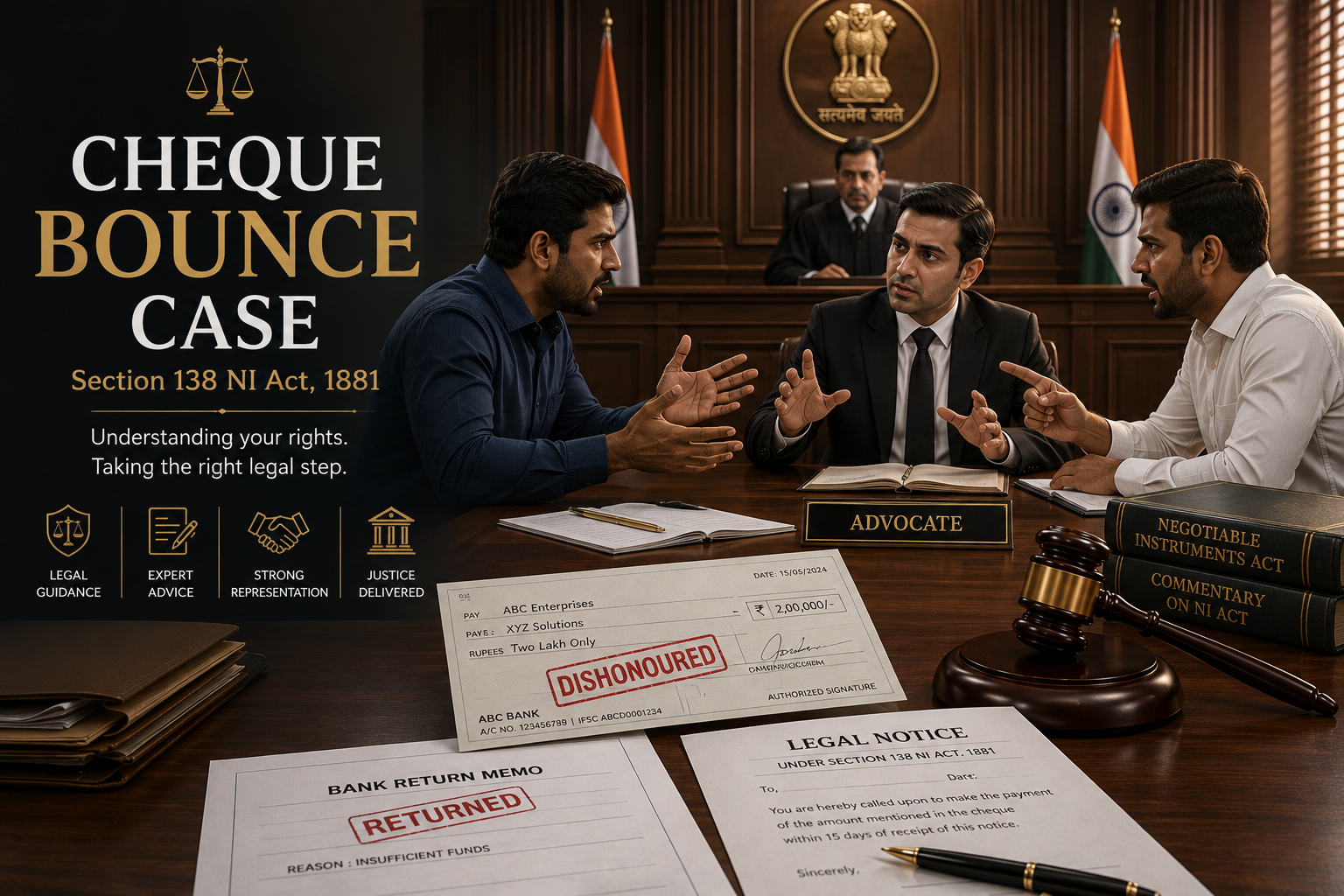
A cheque is commonly used for making payments in personal, business and financial transactions. However, when a cheque is presented to the bank and returned unpaid, it can create a serious legal and financial dispute. Depending on the circumstances, the person who received the cheque may be able to take action under Section 138 of the Negotiable Instruments Act, 1881 (NI Act).
A Cheque Bounce Case is not limited to the cheque being returned by the bank. The matter can involve the bank return memo, a Cheque Bounce Legal Notice, the statutory payment period, filing of a complaint, court proceedings, defence and, in many situations, settlement between the parties.
If you are dealing with a Cheque Bounce Case in Delhi, a Cheque Dishonour Case, or a dispute concerning Section 138 NI Act, understanding the procedure and applicable timelines is important before taking the next step.
What Is a Cheque Bounce Case?
A Cheque Bounce Case generally arises when a cheque presented for payment is dishonoured by the bank. The bank normally issues a Cheque Return Memo, which records the reason why the payment could not be processed.
Common Reasons for Cheque Dishonour
A cheque may be returned for several reasons, including:
-
- Insufficient Funds
-
- Account Closed
-
- Payment Stopped by Drawer
-
- Signature Mismatch
-
- Exceeds Arrangement
-
- Account Frozen
-
- Certain banking or technical reasons
It is important to understand that every dishonoured cheque does not automatically result in a criminal case under Section 138. The legal requirements relating to the cheque, the underlying transaction, the legally enforceable debt or liability, statutory notice and limitation must be considered.
The facts surrounding the transaction therefore matter greatly in a Cheque Dishonour Case.
Section 138 of the Negotiable Instruments Act
Section 138 of the Negotiable Instruments Act, 1881 provides for consequences in specified cases where a cheque is dishonoured for reasons covered by the provision, subject to the statutory conditions.
Stages of a Section 138 Cheque Bounce Case
A typical Section 138 Cheque Bounce Case may involve the following stages:
-
- The cheque is presented to the bank.
-
- The bank dishonours the cheque.
-
- The payee receives the bank return memo or information regarding dishonour.
-
- A statutory demand notice is issued within the prescribed period.
-
- The drawer is given the applicable statutory opportunity to make payment.
-
- If payment is not made, a complaint may be filed within the prescribed limitation period, subject to the requirements of law.
Because these matters involve specific statutory timelines, it is better not to delay action after receiving information about cheque dishonour.
Common Reasons for Cheque Dishonour
The reason mentioned by the bank on the return memo can be relevant when deciding the appropriate legal course.
Insufficient Funds
The bank may return the cheque when the account does not have sufficient funds to cover the amount mentioned in the cheque.
Account Closed
A cheque may be returned where the bank account from which it was issued has been closed.
Payment Stopped by Drawer
The drawer may have instructed the bank not to honour the cheque. The legal position in such cases depends on the facts and applicable law.
Signature Mismatch
The bank may refuse payment when the signature on the cheque does not match its records.
Exceeds Arrangement
A cheque can also be returned when the amount exceeds the banking arrangement available to the account holder.
Other Banking Reasons
There may also be technical, procedural or account-related reasons for the return of a cheque.
The reason printed on the Cheque Return Memo should therefore be examined carefully instead of assuming that every dishonour has the same legal consequence.
What Should You Do After a Cheque Bounces?
If you have received a cheque that has been dishonoured, keep the documents connected with the transaction safely. These records can become important if the dispute later reaches court.
Important Documents to Keep
Depending on the circumstances, relevant documents may include:
-
- Original cheque
-
- Cheque Return Memo
-
- Bank statement
-
- Cheque deposit details
-
- Invoice or bill
-
- Loan or transaction agreement
-
- Payment records
-
- Emails and messages
-
- Business correspondence
-
- Legal notice
-
- Proof of delivery of the notice
-
- Reply received from the drawer
-
- Documents relating to the underlying debt or liability
Keeping the complete transaction record can make it easier to understand the legal position and prepare a Cheque Bounce Legal Case.
Cheque Bounce Legal Notice
A Cheque Bounce Legal Notice is an important statutory step in proceedings under Section 138 NI Act.
The purpose of the notice is generally to demand payment of the cheque amount after dishonour and to inform the drawer about the consequences of failing to make payment within the prescribed period.
What Should a Cheque Bounce Legal Notice Contain?
The notice should be prepared carefully and issued within the applicable statutory timeline. The dates relating to cheque dishonour, receipt of information from the bank and service of the notice can become important later.
A Legal Notice for Cheque Bounce should therefore not be treated as an ordinary demand letter. The contents, amount claimed, transaction details and statutory requirements need to be considered carefully.
What If You Receive a Cheque Bounce Notice?
Receiving a Cheque Bounce Notice should not be ignored.
The drawer may have different options depending on the actual transaction. For example, payment may be made, the matter may be negotiated, or an appropriate legal reply may be sent where there is a genuine dispute regarding the liability.
The correct response depends on the documents, facts and legal position of the particular matter.
Cheque Bounce Notice Period
The Cheque Bounce Notice Period is one of the most important aspects of a Section 138 matter.
After receiving information regarding the dishonour of the cheque from the bank, the payee or holder in due course must comply with the statutory requirement relating to the demand notice.
Once the notice is received, the drawer gets the period provided under law to make payment.
If the payment is not made within the applicable period, the complainant may become entitled to initiate a Section 138 Complaint, subject to the prescribed limitation and other legal requirements.
Important Dates to Keep in Mind
Since even a small mistake in calculating dates can create procedural complications, the relevant dates should be recorded and checked carefully.
What Happens After a Cheque Bounce Notice?
Once a Cheque Bounce Legal Notice is received, the drawer should first understand the transaction and the allegations made in the notice.
Depending on the circumstances, the possible steps may include:
-
- Making payment within the applicable statutory period
-
- Discussing a settlement with the other party
-
- Sending a suitable legal reply
-
- Challenging the alleged liability where there is a genuine legal basis
-
- Taking other legal steps available under the circumstances
Simply ignoring a Cheque Dishonour Notice may not resolve the dispute. If the statutory requirements are fulfilled and payment is not made, the complainant may proceed in accordance with law.
How to File a Cheque Bounce Case?
Cheque Bounce Case Filing requires compliance with the applicable provisions of the Negotiable Instruments Act and procedural law.
Documents Required for Filing
The documents required will depend on the transaction and the stage of the matter. They may include:
-
- Original cheque
-
- Bank return memo
-
- Legal demand notice
-
- Proof of service
-
- Documents relating to the underlying transaction
-
- Payment records
-
- Correspondence between the parties
-
- Other supporting evidence
The appropriate court and filing procedure depend upon the facts and applicable jurisdiction.
A Cheque Bounce Lawyer can examine the available documents and explain the procedural requirements before a complaint is filed.
Cheque Bounce Case Limitation Period
Cheque Bounce Case Limitation is an important issue in Section 138 proceedings.
Several dates may become relevant, including:
-
- Date of cheque presentation
-
- Date of dishonour
-
- Date on which information regarding dishonour is received
-
- Date of issuance of the statutory notice
-
- Date of receipt of notice
-
- Expiry of the payment period
-
- Date of filing of the complaint
Missing a statutory deadline can create legal difficulties. Anyone considering a Section 138 Complaint should therefore examine the limitation position at the earliest opportunity.
Defence in Cheque Bounce Cases
Being accused in a Cheque Bounce Case does not mean that every allegation automatically stands proved. The defence available to the drawer depends on the facts, documents, evidence and applicable law.
Common Issues Considered in a Cheque Bounce Defence
Some issues that may become relevant include:
-
- Whether a legally enforceable debt or liability existed
-
- Whether the cheque was issued in connection with the alleged transaction
-
- Whether the statutory notice was properly issued
-
- Whether the relevant timelines were followed
-
- Whether the underlying transaction is disputed
-
- Whether payment had already been made
-
- Whether the cheque was used or presented in circumstances different from those alleged
-
- Whether there are material inconsistencies in the complainant’s case
-
- Whether the complaint satisfies the applicable legal requirements
A Cheque Bounce Defence should be based on genuine facts and supporting evidence rather than merely technical objections.
Cheque Bounce Case Settlement
A Cheque Bounce Case Settlement can sometimes provide a practical way of resolving the dispute without continuing contested litigation.
Where both sides are willing, they may negotiate terms that suit the circumstances of the matter.
Possible Settlement Options
A settlement may involve:
-
- Payment of the entire cheque amount
-
- An agreed settlement amount
-
- Payment through instalments
-
- Negotiated terms between the parties
-
- Settlement through appropriate court proceedings
-
- Settlement through Lok Adalat, where legally permissible
The settlement terms should be recorded properly. The parties should clearly understand the amount, payment schedule, consequences of default and the manner in which the pending proceedings will be dealt with.
Cheque Bounce Cases in Lok Adalat
Eligible Cheque Bounce Cases may, depending on the circumstances and applicable law, be considered for settlement through Lok Adalat.
Lok Adalat is an alternative dispute-resolution mechanism through which eligible pending and pre-litigation disputes can be resolved on the basis of mutual agreement between the parties.
Cheque Bounce Lok Adalat 2026
For someone looking for a settlement-based resolution, Cheque Bounce Lok Adalat 2026 may therefore be a relevant option where the matter is eligible and both parties are willing to compromise.
The latest information regarding the date, venue, eligibility and procedure should always be confirmed from the concerned Legal Services Authority or court.
Benefits of Cheque Bounce Settlement
Settlement may offer practical advantages where both parties genuinely want to resolve the dispute.
Faster Resolution
A mutually agreed settlement can help the parties avoid continuing litigation for an extended period.
Reduced Litigation Burden
Depending on the circumstances, settlement can reduce repeated appearances and other procedural steps.
Flexible Payment Terms
The parties may negotiate full payment, instalments or other mutually acceptable terms, subject to the applicable legal process.
Clear Closure
A properly documented settlement can provide clarity about what each party has agreed to do.
Lok Adalat Settlement
Where an eligible matter is settled before Lok Adalat, the settlement receives the legal effect provided under the applicable law.
Before agreeing to any settlement, both parties should carefully understand the terms and their legal consequences.
Cheque Bounce Cases in Delhi
Cheque Bounce Cases in Delhi are dealt with before the appropriate court according to the applicable jurisdiction and facts of the particular matter.
A person searching for a Cheque Bounce Lawyer in Delhi, Cheque Bounce Advocate in Delhi, or Section 138 Lawyer in Delhi should consider the nature of the transaction and the stage at which the dispute currently stands.
A Cheque Dishonour Case Delhi may involve several issues, including legal notice, limitation, jurisdiction, evidence, filing, defence and settlement.
Documents Required for a Cheque Bounce Case
The exact documents depend on the facts of the dispute. Commonly relevant documents may include:
-
- Original cheque
-
- Cheque Return Memo
-
- Bank statement
-
- Cheque deposit record
-
- Proof of delivery of notice
-
- Reply to notice
-
- Loan agreement
-
- Invoice or bill
-
- Purchase or sale documents
-
- Payment records
-
- Account statements
-
- Emails and messages
-
- Business correspondence
-
- Contracts or agreements
-
- Previous court orders, where applicable
A complete set of documents can help in understanding the transaction and preparing the case more effectively.
How HoBo Legal & Associates Can Assist
HoBo Legal & Associates provides legal assistance in matters relating to Cheque Bounce Cases, Section 138 NI Act, cheque dishonour disputes, legal notices, settlement, Lok Adalat matters and related court proceedings.
Legal Assistance for Cheque Bounce Matters
Depending on the nature and stage of the matter, assistance may include:
Cheque Bounce Legal Notice
Section 138 Complaint
Cheque Dishonour Case
Cheque Bounce Case Filing
Cheque Bounce Defence
Cheque Bounce Settlement
Cheque Bounce Lok Adalat 2026
Legal Replies to Cheque Bounce Notices
Documentation and Case Preparation
Settlement and Negotiation Assistance
Court-Related Legal Assistance
The approach should begin with understanding the transaction, reviewing the available documents and identifying the applicable legal procedure before deciding the next course of action.
Website: HoBo Legal & Associates
Frequently Asked Questions About Cheque Bounce Cases
What is a Cheque Bounce Case?
A Cheque Bounce Case may arise when a cheque is dishonoured and the statutory conditions required under Section 138 of the Negotiable Instruments Act are satisfied.
What is Section 138 NI Act?
Section 138 NI Act deals with specified situations involving cheque dishonour, including circumstances relating to insufficient funds or exceeding the banking arrangement, subject to the statutory requirements.
What is a Cheque Bounce Legal Notice?
A Cheque Bounce Legal Notice is a statutory demand notice issued after cheque dishonour, asking the drawer to make payment of the cheque amount within the period prescribed by law.
How long does a cheque bounce case take?
There is no single fixed period for every Cheque Bounce Case. The duration may depend on the court, facts of the case, evidence, procedural stages, adjournments, settlement and other circumstances.
Can a cheque bounce case be settled?
Yes. Depending on the facts and applicable law, a Cheque Bounce Case may be settled between the parties, including through appropriate court or Lok Adalat proceedings.
Can cheque bounce cases go to Lok Adalat?
Eligible Cheque Bounce Cases may be considered for settlement through Lok Adalat where legally permissible and where both parties are willing to resolve the dispute.
Can a cheque bounce case be withdrawn?
Depending on the stage and circumstances, a Cheque Bounce Case may be capable of being compounded or otherwise disposed of following settlement, subject to the applicable legal procedure and court orders.
What happens if a cheque bounce notice is ignored?
If the statutory requirements are fulfilled and payment is not made within the prescribed period, the complainant may have the option to initiate proceedings, subject to limitation and other applicable legal requirements.
Can I defend a cheque bounce case?
Yes. A person facing a Cheque Bounce Case can raise legally available defences based on the facts, documents and evidence. The appropriate defence will depend on the individual matter.
Do I need a lawyer for a cheque bounce case?
A lawyer may not be legally mandatory in every situation. However, a Cheque Bounce Lawyer or Cheque Bounce Advocate can assist with legal notices, limitation, filing, documentation, defence, settlement and court proceedings.
Conclusion
A Cheque Bounce Case involves more than simply receiving a dishonoured cheque. The statutory notice, applicable payment period, limitation, underlying transaction, supporting documents and procedural requirements can all have an important bearing on the matter.
Whether you have received a Cheque Bounce Legal Notice, are considering a Section 138 Complaint, need assistance with a Cheque Dishonour Case, or are exploring Cheque Bounce Defence, Cheque Bounce Settlement or Cheque Bounce Lok Adalat 2026, it is advisable to examine the facts and documents before taking the next legal step.
For individuals and businesses dealing with Cheque Bounce Cases in Delhi, appropriate legal assistance can help in understanding the available options and the procedure applicable to the particular matter.
HoBo Legal & Associates provides legal assistance concerning Cheque Bounce Cases, Section 138 NI Act matters, cheque dishonour disputes, legal notices, settlement, Lok Adalat matters and related legal proceedings.
Website: HoBo Legal & Associates
Disclaimer
This article is provided only for general informational purposes and should not be treated as legal advice for any particular case. The applicable procedure, limitation, legal remedies and outcome may depend on the facts of the individual matter and the law applicable at the relevant time. Professional legal advice should be obtained before taking action.
चेक बाउंस मामले – Section 138 NI Act, Legal Notice, प्रक्रिया, बचाव और Settlement
आज के समय में चेक का इस्तेमाल व्यापार, उधार, खरीद-बिक्री और कई तरह के वित्तीय लेन-देन में किया जाता है। लेकिन जब बैंक में जमा किया गया चेक भुगतान के बिना वापस हो जाता है, तो मामला केवल बैंकिंग समस्या तक सीमित नहीं रहता। परिस्थितियों के अनुसार इससे कानूनी विवाद भी पैदा हो सकता है और कुछ मामलों में Section 138 of the Negotiable Instruments Act, 1881 (NI Act) के तहत कार्यवाही की जा सकती है।
एक Cheque Bounce Case में बैंक का return memo, Cheque Bounce Legal Notice, भुगतान के लिए निर्धारित समय, complaint filing, court proceedings, defence और settlement जैसे कई चरण सामने आ सकते हैं।
इसलिए यदि आप Cheque Bounce Cases in Delhi, किसी Cheque Dishonour Case या Section 138 NI Act से जुड़े विवाद का सामना कर रहे हैं, तो शुरुआत में ही मामले के दस्तावेज और लागू कानूनी प्रक्रिया को समझना उपयोगी रहता है।
चेक बाउंस मामला क्या होता है?
जब किसी चेक को भुगतान के लिए बैंक में प्रस्तुत किया जाता है और बैंक उसे भुगतान किए बिना वापस कर देता है, तो सामान्य भाषा में इसे Cheque Bounce या Cheque Dishonour कहा जाता है।
बैंक आमतौर पर चेक के साथ एक Cheque Return Memo देता है, जिसमें चेक वापस होने का कारण लिखा होता है।
चेक बाउंस होने के सामान्य कारण
-
- Insufficient Funds
-
- Account Closed
-
- Payment Stopped by Drawer
-
- Signature Mismatch
-
- Exceeds Arrangement
-
- Account Frozen
-
- अन्य बैंकिंग या तकनीकी कारण
यह समझना जरूरी है कि हर bounced cheque अपने आप Section 138 Case नहीं बन जाता। संबंधित लेन-देन, Legally Enforceable Debt or Liability, statutory notice, limitation और कानून की अन्य आवश्यक शर्तों को देखना पड़ता है।
Section 138 NI Act क्या है?
Section 138 of the Negotiable Instruments Act, 1881 कुछ परिस्थितियों में cheque dishonour से संबंधित कानूनी प्रावधान है। इसमें कानून द्वारा निर्धारित कुछ शर्तों के पूरा होने पर कार्रवाई की स्थिति बन सकती है।
Section 138 Cheque Bounce Case के प्रमुख चरण
-
- चेक को बैंक में प्रस्तुत किया जाता है।
-
- बैंक द्वारा चेक dishonour किया जाता है।
-
- बैंक से return memo या dishonour की जानकारी मिलती है।
-
- निर्धारित समय के भीतर statutory demand notice भेजा जाता है।
-
- नोटिस प्राप्त होने के बाद drawer को कानून के अनुसार payment करने का अवसर मिलता है।
-
- भुगतान न होने की स्थिति में लागू limitation period के भीतर complaint दाखिल की जा सकती है, यदि बाकी कानूनी शर्तें भी पूरी हों।
इन मामलों में dates बहुत महत्वपूर्ण होती हैं। इसलिए cheque dishonour की जानकारी मिलने के बाद मामले को अनावश्यक रूप से लंबित नहीं रखना चाहिए।
चेक बाउंस होने के सामान्य कारण
बैंक ने cheque return memo में जो reason दिया है, उसे ध्यान से देखना चाहिए। उसी के आधार पर आगे की legal strategy तय करने में मदद मिल सकती है।
Insufficient Funds
जब खाते में cheque amount का भुगतान करने के लिए पर्याप्त धनराशि उपलब्ध नहीं होती, तो cheque dishonour हो सकता है।
Account Closed
यदि cheque जिस bank account से जारी किया गया था वह बंद हो चुका है, तो cheque वापस किया जा सकता है।
Payment Stopped by Drawer
कभी-कभी drawer बैंक को cheque का payment रोकने का निर्देश देता है। ऐसी स्थिति का कानूनी प्रभाव मामले के facts और applicable law पर निर्भर कर सकता है।
Signature Mismatch
यदि cheque पर किया गया signature बैंक के रिकॉर्ड से match नहीं करता, तो बैंक payment रोक सकता है।
Exceeds Arrangement
यदि cheque amount account holder के उपलब्ध banking arrangement से अधिक है, तो cheque return हो सकता है।
अन्य बैंकिंग कारण
कुछ मामलों में technical या account-related कारणों से भी cheque dishonour हो सकता है।
इसलिए Cheque Dishonour Case में केवल cheque bounce होने की बात देखना पर्याप्त नहीं है; transaction और bank return reason दोनों को समझना जरूरी है।
चेक बाउंस होने के बाद क्या करना चाहिए?
यदि आपका cheque dishonour हुआ है, तो लेन-देन से जुड़े सभी documents संभालकर रखें। आगे legal proceedings की जरूरत पड़ने पर यही records काफी महत्वपूर्ण हो सकते हैं।
जरूरी Documents
-
- Original Cheque
-
- Cheque Return Memo
-
- Bank Statement
-
- Cheque Deposit Details
-
- Invoice या Bill
-
- Loan Agreement
-
- Payment Records
-
- Emails और Messages
-
- Business Correspondence
-
- Cheque Bounce Legal Notice
-
- Notice Delivery Proof
-
- प्राप्त Legal Reply
-
- Underlying Debt या Liability से जुड़े documents
Documents को व्यवस्थित रखना Cheque Bounce Legal Case की तैयारी में मदद करता है।
Cheque Bounce Legal Notice क्या है?
Cheque Bounce Legal Notice Section 138 proceedings का एक महत्वपूर्ण statutory step हो सकता है।
इस notice के माध्यम से आम तौर पर dishonoured cheque की राशि का payment मांगते हुए drawer को यह बताया जाता है कि cheque का payment नहीं हुआ है और कानून के अनुसार आगे कार्रवाई की जा सकती है।
Legal Notice में किन बातों का ध्यान रखें?
Legal Notice for Cheque Bounce तैयार करते समय transaction, cheque details, dishonour की जानकारी और applicable statutory requirements को ध्यान में रखना चाहिए।
नोटिस जारी करने में applicable timeline का भी ध्यान रखना आवश्यक है।
अगर Cheque Bounce Notice मिल जाए तो क्या करें?
यदि आपको Cheque Bounce Notice मिला है, तो उसे नजरअंदाज करना सही तरीका नहीं है।
पहले यह देखना चाहिए कि notice किस transaction के संबंध में है, claimed amount सही है या नहीं और आपके पास payment या liability से संबंधित कौन से documents उपलब्ध हैं।
परिस्थितियों के अनुसार payment, settlement, legal reply या अन्य उपलब्ध legal remedy पर विचार किया जा सकता है।
Cheque Bounce Notice Period
Cheque Bounce Notice Period Section 138 matter का एक महत्वपूर्ण हिस्सा है।
Cheque dishonour की जानकारी मिलने के बाद payee या holder in due course को कानून में निर्धारित समय के भीतर demand notice जारी करने की आवश्यकता हो सकती है।
Notice मिलने के बाद drawer को भी कानून द्वारा निर्धारित समय में payment करने का अवसर मिलता है।
यदि payment नहीं किया जाता, तो complainant applicable limitation के अधीन Section 138 Complaint दाखिल कर सकता है, बशर्ते मामले की अन्य statutory requirements पूरी हों।
इसलिए cheque dishonour, notice और payment से जुड़ी सभी dates को सही तरीके से record करना जरूरी है।
Notice मिलने के बाद क्या होता है?
Cheque Dishonour Notice मिलने के बाद drawer को पहले पूरे transaction और notice में लगाए गए आरोपों को समझना चाहिए।
परिस्थितियों के अनुसार विकल्प अलग हो सकते हैं:
-
- निर्धारित समय में payment करना
-
- Cheque Bounce Settlement के लिए बातचीत करना
-
- उचित legal reply भेजना
-
- वास्तविक कानूनी आधार होने पर liability या transaction को dispute करना
-
- परिस्थितियों के अनुसार अन्य कानूनी कदम उठाना
Notice को ignore करने से विवाद खत्म नहीं होता। यदि कानून की आवश्यक शर्तें पूरी हैं और payment नहीं किया जाता, तो complainant आगे proceedings शुरू कर सकता है।
Cheque Bounce Case Filing कैसे होती है?
Cheque Bounce Case Filing में Negotiable Instruments Act और लागू procedural law का पालन करना होता है।
Filing के लिए Documents
मामले के अनुसार निम्न documents की आवश्यकता पड़ सकती है:
-
- Original Cheque
-
- Bank Return Memo
-
- Legal Demand Notice
-
- Notice Service Proof
-
- Underlying Transaction Documents
-
- Payment Records
-
- Supporting Evidence
कौन-सी court में complaint दाखिल होगी और filing की प्रक्रिया क्या होगी, यह मामले के facts तथा applicable jurisdiction पर निर्भर करता है।
Cheque Bounce Lawyer documents देखकर आगे की procedure को समझने में सहायता कर सकता है।
Cheque Bounce Case Limitation Period
Cheque Bounce Case Limitation को नजरअंदाज करना उचित नहीं है।
इस तरह के मामले में cheque presentation, dishonour, bank information, notice, notice receipt, payment period और complaint filing जैसी dates महत्वपूर्ण हो सकती हैं।
यदि कोई statutory deadline निकल जाती है, तो आगे legal complications हो सकती हैं। इसलिए Section 138 Complaint से पहले limitation position को carefully check करना चाहिए।
Cheque Bounce Defence – बचाव कैसे किया जाता है?
किसी व्यक्ति के खिलाफ Cheque Bounce Case दर्ज होने का अर्थ यह नहीं है कि complainant की हर बात अपने आप साबित हो गई।
Defence in Cheque Bounce Case हमेशा case के facts, documents और evidence पर निर्भर करता है।
बचाव में किन बातों पर विचार किया जा सकता है?
-
- क्या वास्तव में legally enforceable debt या liability थी?
-
- क्या cheque उसी transaction के लिए दिया गया था जिसका आरोप लगाया गया है?
-
- क्या statutory notice सही तरीके से जारी हुआ?
-
- क्या applicable timelines का पालन किया गया?
-
- क्या underlying transaction में कोई वास्तविक विवाद है?
-
- क्या payment पहले ही की जा चुकी थी?
-
- क्या complainant के documents या statement में कोई महत्वपूर्ण inconsistency है?
-
- क्या complaint कानून की आवश्यकताओं को पूरा करती है?
Cheque Bounce Defence वास्तविक facts और available evidence पर आधारित होना चाहिए।
Cheque Bounce Settlement – क्या मामला समझौते से खत्म हो सकता है?
कई परिस्थितियों में Cheque Bounce Case Settlement एक practical option हो सकता है, खासकर जब दोनों parties विवाद को आगे बढ़ाने के बजाय mutually acceptable terms पर मामला खत्म करना चाहती हों।
Settlement के संभावित तरीके
-
- पूरी cheque amount का payment
-
- Agreed Settlement Amount
-
- Instalments में payment
-
- Negotiated Terms
-
- Court proceedings के माध्यम से settlement
-
- Lok Adalat के माध्यम से settlement, जहां legally permissible हो
Settlement की terms को properly document करना जरूरी है। Payment schedule, amount और proceedings के disposal से संबंधित बातें स्पष्ट होनी चाहिए।
Cheque Bounce Lok Adalat 2026
Eligible Cheque Bounce Cases को circumstances के अनुसार Lok Adalat में settlement के लिए consider किया जा सकता है।
Lok Adalat pending और pre-litigation eligible matters को mutual settlement के माध्यम से resolve करने का alternative mechanism है।
इस कारण Cheque Bounce Lok Adalat 2026 उन parties के लिए relevant हो सकता है जो अपने eligible cheque dispute को settlement के माध्यम से समाप्त करना चाहती हैं।
हालांकि Lok Adalat की date, venue, eligibility और procedure समय-समय पर बदल सकते हैं। इसलिए संबंधित Legal Services Authority या court से latest information verify करना बेहतर है।
Cheque Bounce Settlement के फायदे
यदि दोनों parties settlement के लिए तैयार हों, तो कुछ practical advantages हो सकते हैं।
जल्दी समाधान
Settlement के कारण parties को लंबी contested litigation जारी रखने की आवश्यकता कम हो सकती है।
Litigation Burden कम होना
कई procedural steps और repeated appearances से बचने का अवसर मिल सकता है।
Payment Terms
Parties अपनी circumstances के अनुसार full payment, instalments या अन्य mutually agreed terms पर बातचीत कर सकती हैं।
Dispute Closure
जब settlement को सही तरीके से document किया जाता है, तो parties के बीच obligations अधिक स्पष्ट हो जाती हैं।
Lok Adalat Settlement
यदि eligible matter Lok Adalat में settle होता है, तो applicable law के अनुसार settlement का कानूनी प्रभाव होता है।
किसी settlement पर सहमति देने से पहले उसके सभी terms को समझ लेना चाहिए।
Cheque Bounce Cases in Delhi
Cheque Bounce Cases in Delhi में jurisdiction एक महत्वपूर्ण मुद्दा हो सकता है। मामले के facts और applicable law के अनुसार appropriate court में proceedings की जा सकती हैं।
यदि आप Cheque Bounce Lawyer in Delhi, Cheque Bounce Advocate in Delhi या Section 138 Lawyer in Delhi की तलाश कर रहे हैं, तो केवल notice या filing ही नहीं, बल्कि transaction और पूरे case की स्थिति को समझना महत्वपूर्ण है।
एक Cheque Dishonour Case Delhi में legal notice, limitation, jurisdiction, evidence, defence, filing और settlement जैसे कई मुद्दे सामने आ सकते हैं।
Cheque Bounce Case के लिए Documents
हर मामले में documents की जरूरत अलग हो सकती है। सामान्य रूप से उपयोगी records में शामिल हो सकते हैं:
-
- Original Cheque
-
- Cheque Return Memo
-
- Bank Statement
-
- Cheque Deposit Record
-
- Cheque Bounce Legal Notice
-
- Notice Delivery Proof
-
- Legal Reply
-
- Loan Agreement
-
- Invoice या Bill
-
- Payment Records
-
- Account Statements
-
- Emails और Messages
-
- Business Correspondence
-
- Contracts या Agreements
-
- Previous Court Orders, यदि लागू हों
Documents का पूरा record रखने से transaction और legal position को समझने में सुविधा होती है।
HoBo Legal & Associates से Legal Assistance
HoBo Legal & Associates Cheque Bounce Cases, Section 138 NI Act, cheque dishonour disputes, legal notices, settlement, Lok Adalat matters और संबंधित court proceedings में legal assistance प्रदान करता है।
Cheque Bounce Matters में Legal Assistance
Cheque Bounce Legal Notice
Section 138 Complaint
Cheque Dishonour Case
Cheque Bounce Case Filing
Cheque Bounce Defence
Cheque Bounce Settlement
Cheque Bounce Lok Adalat 2026
Cheque Bounce Notice का Legal Reply
Documentation और Case Preparation
Settlement और Negotiation Assistance
Court-Related Legal Assistance
किसी भी matter में आगे की strategy तय करने से पहले transaction, documents और available legal options को समझना जरूरी है।
Website: HoBo Legal & Associates
Frequently Asked Questions – Cheque Bounce Cases
Cheque Bounce Case क्या है?
Cheque Bounce Case उस स्थिति में सामने आ सकता है जब cheque dishonour हो और Section 138 of the Negotiable Instruments Act के तहत आवश्यक statutory conditions पूरी होती हों।
Section 138 NI Act क्या है?
Section 138 NI Act कुछ specified cheque dishonour situations से संबंधित कानूनी प्रावधान है, जिसमें insufficient funds या banking arrangement से जुड़ी परिस्थितियां शामिल हो सकती हैं, subject to statutory conditions.
Cheque Bounce Legal Notice क्या है?
Cheque Bounce Legal Notice cheque dishonour के बाद भेजा जाने वाला statutory demand notice है, जिसमें cheque amount के payment की मांग की जाती है।
Cheque Bounce Case कितने समय तक चलता है?
हर Cheque Bounce Case की duration अलग हो सकती है। Court, evidence, facts, procedural stages, settlement और अन्य परिस्थितियों के कारण समय अलग-अलग लग सकता है।
क्या Cheque Bounce Case settle हो सकता है?
हाँ। Facts और applicable law के अनुसार Cheque Bounce Settlement किया जा सकता है। कुछ मामलों में court या Lok Adalat के माध्यम से भी settlement हो सकता है।
क्या Cheque Bounce Case Lok Adalat में जा सकता है?
Eligible Cheque Bounce Cases को settlement के लिए Lok Adalat में consider किया जा सकता है, यदि मामला legally settleable हो और दोनों parties compromise के लिए तैयार हों।
क्या Cheque Bounce Case withdraw हो सकता है?
Settlement या compounding के बाद Cheque Bounce Case को applicable legal procedure और court orders के अनुसार dispose किया जा सकता है। प्रत्येक मामले की स्थिति अलग हो सकती है।
अगर Cheque Bounce Notice का जवाब नहीं दिया तो क्या होगा?
यदि statutory requirements पूरी हैं और निर्धारित अवधि में payment नहीं किया जाता, तो complainant applicable limitation और law के अनुसार आगे legal proceedings शुरू कर सकता है।
क्या Cheque Bounce Case में Defence किया जा सकता है?
हाँ। Cheque Bounce Case Defence facts, documents और available evidence के आधार पर उठाया जा सकता है। कौन-सा defence उपलब्ध है, यह प्रत्येक case की परिस्थितियों पर निर्भर करेगा।
क्या Cheque Bounce Case के लिए Lawyer जरूरी है?
हर स्थिति में lawyer रखना अनिवार्य नहीं होता। लेकिन Cheque Bounce Lawyer या Cheque Bounce Advocate legal notice, limitation, filing, defence, settlement और court proceedings में सहायता कर सकता है।
निष्कर्ष
Cheque Bounce Cases में केवल cheque dishonour होना ही पूरी कहानी नहीं है। Legal notice, statutory payment period, limitation, underlying transaction, documents और procedural requirements सभी महत्वपूर्ण हो सकते हैं।
यदि आप Cheque Bounce Legal Notice, Section 138 Complaint, Cheque Dishonour Case, Cheque Bounce Defence, Cheque Bounce Settlement या Cheque Bounce Lok Adalat 2026 से संबंधित समस्या का सामना कर रहे हैं, तो मामले के documents और facts को देखकर आगे की प्रक्रिया तय करना बेहतर रहता है।
दिल्ली में Cheque Bounce Cases से संबंधित मामलों में उचित legal assistance आपको अपने मामले की स्थिति, उपलब्ध options और आगे की procedure को समझने में मदद कर सकती है।
HoBo Legal & Associates Cheque Bounce Cases, Section 138 NI Act, Cheque Dishonour Disputes, Legal Notice, Settlement और Lok Adalat Matters से संबंधित legal assistance प्रदान करता है।
Website: HoBo Legal & Associates
Disclaimer
यह सामग्री केवल सामान्य कानूनी जानकारी के उद्देश्य से तैयार की गई है। इसे किसी विशेष मामले में legal advice नहीं माना जाना चाहिए। Limitation, procedure, legal remedies और अन्य कानूनी पहलू मामले के facts और उस समय लागू कानून पर निर्भर कर सकते हैं। किसी भी कार्रवाई से पहले उचित कानूनी सलाह लेना आवश्यक है।