Love Marriage in India – Legal Rights, Court Marriage, Registration & Protection
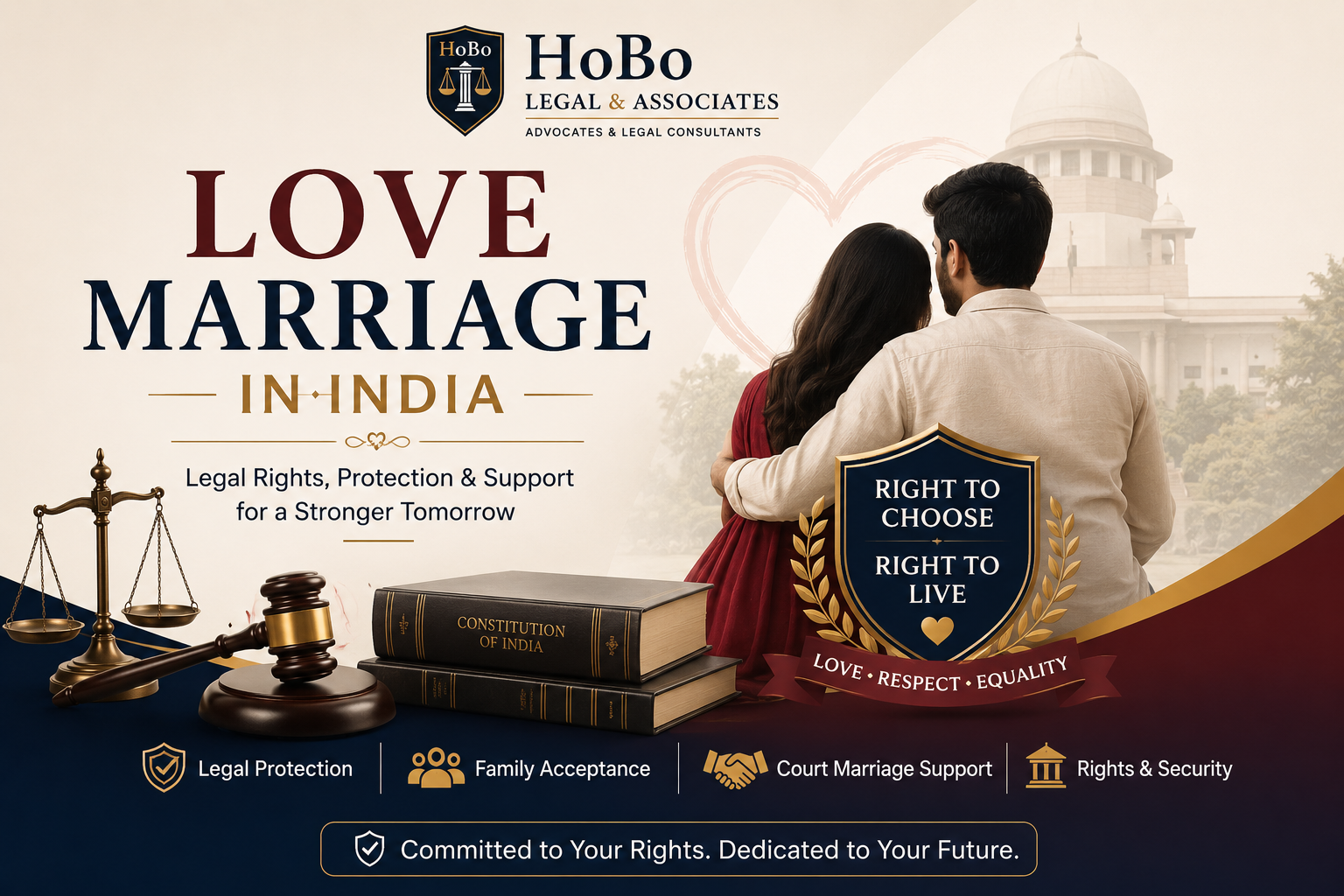
Love Marriage in India is becoming increasingly common, but couples may have important questions about their legal rights, court marriage, marriage registration, family opposition, inter-caste marriage, inter-religious marriage and legal protection.
Choosing a life partner is a personal decision. However, couples should understand the applicable marriage law, documentation requirements and legal remedies before taking important steps.
The Special Marriage Act, 1954 provides a statutory framework for solemnisation of certain marriages, registration of marriages celebrated in other forms and related matrimonial matters.
What Is Love Marriage in India?
A Love Marriage in India generally means a marriage where two individuals choose each other as life partners based on their mutual consent rather than the marriage being primarily arranged by their families.
Love marriages may include:
-
- Inter-caste marriages
-
- Inter-religious marriages
-
- Court marriages
-
- Marriage after a long-term relationship
-
- Marriage followed by registration with the competent authority
The legal procedure depends on the circumstances of the couple and the marriage law applicable to them.
Is Love Marriage Legal in India?
Yes. Love Marriage in India can be legally valid when the parties satisfy the conditions prescribed by the applicable marriage law.
The law does not make family approval a universal requirement for an adult person’s choice of spouse. The Supreme Court has recognized that choosing a life partner is an important aspect of individual autonomy and personal liberty.
At the same time, the couple must satisfy the legal requirements applicable to their marriage. The Special Marriage Act, 1954, for example, contains specific conditions relating to solemnisation of marriages.
Legal Rights in Love Marriage
Understanding your rights is an important part of planning a Love Marriage in India.
Right to Choose a Life Partner
The Supreme Court has recognized that an individual’s choice of a life partner falls within the sphere of personal autonomy. Neither social disapproval nor family disagreement by itself determines whom an adult must marry.
Right to Marriage Under Applicable Law
Eligible couples can marry under the applicable personal law or, where the statutory requirements are satisfied, through the Special Marriage Act, 1954.
Right to Marriage Registration
Marriage registration provides official documentation of the marriage and may be important for various future legal and administrative purposes.
Right to Seek Legal Protection
If an adult couple faces a genuine threat of violence, coercion, unlawful confinement or other illegal interference, appropriate legal remedies may be available depending upon the facts.
The Supreme Court has emphasized that individuals exercising their lawful choices should be protected from physical threats and coercive action.
Court Marriage for Love Marriage in India
Court marriage is one of the options available to eligible couples who want to marry through a civil statutory procedure.
The Special Marriage Act, 1954 contains provisions relating to notice of intended marriage, publication, objections, solemnisation and issuance of a marriage certificate.
General Court Marriage Process
The process generally involves:
-
- Checking the eligibility of both parties.
-
- Collecting the required documents.
-
- Giving notice to the appropriate Marriage Officer where required.
-
- Completing the statutory notice period and procedure.
-
- Appearing before the Marriage Officer with the required witnesses.
-
- Completing the solemnisation formalities.
-
- Obtaining the marriage certificate after completion of the legal requirements.
Under the Special Marriage Act, the notice of intended marriage is generally given to the Marriage Officer of the district where at least one party has resided for at least 30 days immediately before giving the notice.
Love Marriage Registration
Love marriage registration can be important for establishing official proof of marital status.
Depending on the applicable law and local authority, couples may be asked to provide documents such as:
-
- Identity proof
-
- Age proof
-
- Address proof
-
- Photographs
-
- Marriage-related documents
-
- Witness details
-
- Other documents prescribed by the competent authority
Requirements can differ depending on the applicable marriage law and local registration procedure.
Inter-Caste Love Marriage
An inter-caste love marriage involves two people belonging to different castes.
Caste differences do not automatically prevent eligible adults from choosing their life partners. The Supreme Court has repeatedly recognized the importance of individual autonomy in marriage-related decisions.
If an inter-caste couple faces threats, violence or unlawful interference, they can seek appropriate legal assistance based on the circumstances.
Inter-Religious Love Marriage
An inter-religious love marriage involves partners belonging to different religions.
The Special Marriage Act, 1954 provides a civil statutory framework for certain marriages and contains provisions regarding solemnisation and registration.
Couples considering an inter-religious marriage should understand the applicable procedure, documentation and statutory requirements before proceeding.
Can Parents Stop Love Marriage?
Parents may disagree with an adult child’s relationship or marriage, but disagreement alone does not give them unlimited authority over the adult’s choice of life partner.
The Supreme Court has held that choices concerning marriage fall within an individual’s personal liberty and autonomy.
However, every marriage must comply with the applicable legal requirements. Personal choice does not remove statutory conditions relating to a valid marriage.
What If Family Members Threaten a Couple?
Sometimes couples choosing a Love Marriage in India may face threats, harassment, coercion or pressure from family members or other persons.
Where there is a genuine threat to safety, the appropriate legal remedy depends upon the facts. Depending on the circumstances, a couple may need to consider:
-
- Approaching the police
-
- Seeking appropriate court protection
-
- Filing a complaint regarding unlawful conduct
-
- Obtaining legal advice
-
- Taking steps concerning personal safety
A lawyer can assess the circumstances and explain which legal remedy may be appropriate.
Legal Protection for Love Marriage Couples
The right to choose a partner is an important aspect of individual autonomy. The Supreme Court has recognized that people exercising their lawful choices should not be subjected to physical threats or coercive action.
If a couple believes there is a genuine threat to their safety, they should not ignore the situation. Timely legal advice can help them understand the available options.
Documents Required for Love Marriage
The exact documents depend on the applicable law and local Marriage Officer or registration authority.
Commonly requested documents may include:
-
- Aadhaar or other identity proof
-
- Age proof
-
- Address proof
-
- Passport-size photographs
-
- Affidavit or declaration, where applicable
-
- Witness identity documents
-
- Existing marriage-related documents, where applicable
Couples should confirm the current document requirements with the competent authority before submitting an application.
Common Mistakes to Avoid in Love Marriage
1. Ignoring Legal Eligibility
Before marriage, both parties should ensure that they satisfy the applicable legal conditions.
2. Using Incorrect Documents
Differences in names, dates of birth or addresses across documents can create unnecessary procedural issues.
3. Ignoring Existing Marital Status
An existing marriage can have significant legal consequences. Couples should ensure that the proposed marriage complies with the applicable law.
4. Assuming Court Marriage Is Instant
Court marriage under the Special Marriage Act involves a statutory procedure, including notice requirements. It should not be assumed that the process is completed immediately.
5. Ignoring Genuine Threats
If there is a real threat of violence or unlawful confinement, obtaining timely legal assistance can be important.
Why Legal Guidance Matters in Love Marriage
A Love Marriage in India can involve more than simply completing a marriage ceremony. Couples may need to understand:
-
- Applicable marriage law
-
- Eligibility requirements
-
- Court marriage procedure
-
- Marriage registration
-
- Documentation
-
- Inter-caste marriage issues
-
- Inter-religious marriage issues
-
- Family disputes
-
- Protection-related legal remedies
Professional legal guidance can help couples understand the procedure applicable to their particular circumstances.
How HoBo Legal & Associates Can Help
HoBo Legal & Associates provides legal assistance relating to Love Marriage, Court Marriage, Marriage Registration, Inter-Caste Marriage, Inter-Religious Marriage, Family Disputes and Legal Protection.
The firm can assist clients in understanding applicable legal procedures, documentation requirements and available legal remedies based on the facts of their matter.
For Legal Consultation: +91-8810659872
Website: hobolegalandassociates.in
Frequently Asked Questions About Love Marriage in India
1. Is Love Marriage in India legal?
Yes. A love marriage can be legally valid when the parties satisfy the requirements of the applicable marriage law.
2. Can an adult choose their own life partner?
The Supreme Court has recognized the individual’s autonomy to choose a life partner as part of personal liberty.
3. Can parents legally force an adult to leave their partner?
Family disagreement does not by itself determine an adult’s choice of life partner. Individual autonomy in marriage is protected by law, subject to applicable statutory requirements.
4. Can an inter-caste couple marry?
Yes, an eligible inter-caste couple can marry subject to the applicable legal requirements.
5. Can an inter-religious couple have a court marriage?
The Special Marriage Act, 1954 provides a statutory framework for certain civil marriages, subject to its legal conditions and procedure.
6. How long does court marriage take?
The timeline depends on the applicable procedure and authority. Under the Special Marriage Act, the statutory notice procedure includes a 30-day period after publication before solemnisation, subject to the Act’s provisions.
7. What documents are needed for love marriage?
Identity proof, age proof, address proof, photographs and other prescribed documents may be required. Exact requirements can vary.
8. What if family members threaten a couple?
If there is a genuine threat, violence, coercion or unlawful confinement, the couple should seek appropriate legal assistance and consider the remedies available under the circumstances.
9. Can a lawyer help with court marriage?
Yes. A lawyer can explain the applicable law, documentation, procedure and related legal issues. The marriage itself must be completed through the competent authority.
10. Where can I get legal assistance for Love Marriage in India?
You can contact HoBo Legal & Associates for legal consultation regarding love marriage, court marriage, marriage registration, family disputes and related legal matters.
A Love Marriage in India involves both personal choice and legal requirements. Couples should understand their rights, the applicable marriage law, registration procedure, documentation requirements and available legal remedies.
Whether the matter involves court marriage, inter-caste marriage, inter-religious marriage, family opposition or protection concerns, obtaining appropriate legal guidance can help couples understand the correct legal process.
HoBo Legal & Associates provides legal assistance for Love Marriage, Court Marriage, Marriage Registration, Family Disputes and Legal Protection.
+91-8810659872
hobolegalandassociates.in
Legal Disclaimer
This article is provided for general informational and educational purposes only and should not be treated as legal advice. Marriage laws, procedures, documentation requirements and available remedies may vary depending on the facts of each matter and applicable law. Readers should consult a qualified legal professional for advice regarding their specific circumstances. No advocate-client relationship is created by reading this article.